AGU Honors 2026
AGU annually honors researchers and faculty members for scientific breakthroughs and groundbreaking new methods and theories, as well as social engagement, inspiring teaching, or sustainable communication with the public. The Education Section invites you to nominate YOUR colleagues for an AGU Fellowship or for one of the prestigious prizes at Section and Union levels. The Education Section’s Dorothy LaLonde Stout Lecture & Award annually recognizes individuals that have made exemplary contributions to Earth and space science education and outreach. You can find all information about honors, deadlines, and the selection process at https://www.agu.org/honors. Nominate a colleague today!
Questions or comments? Contact the Executive Committee of the Education Section or the AGU Honors and Recognition Committee.
|

|
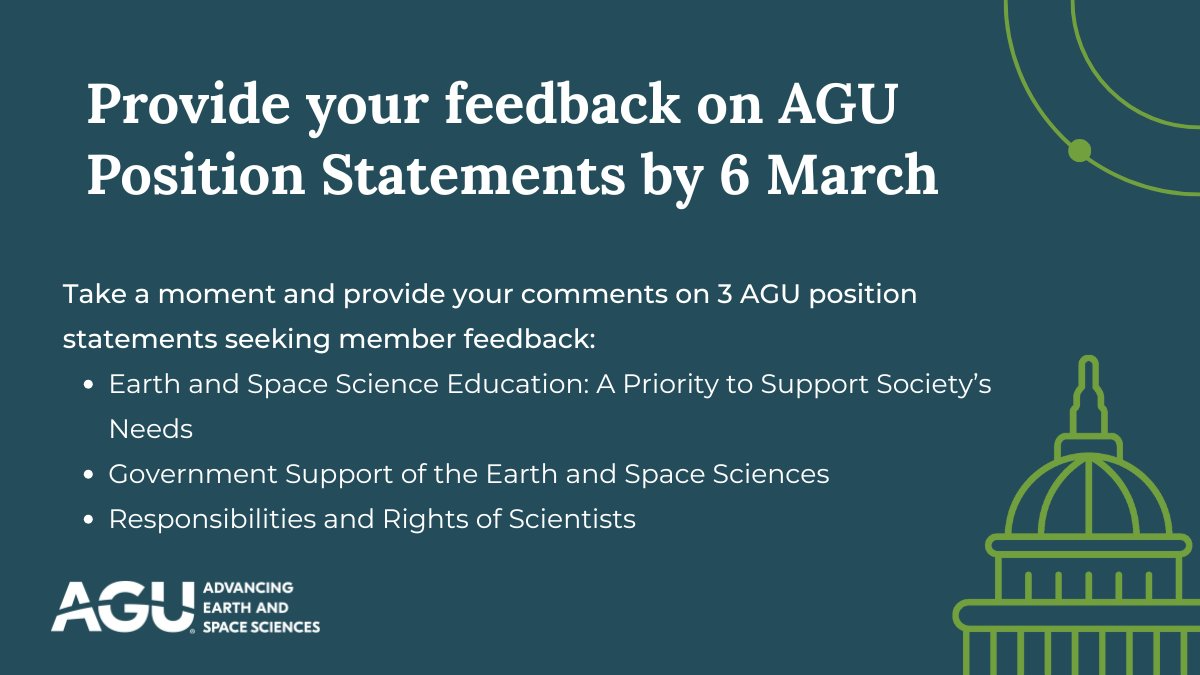
Have your voice heard: Comment on Draft AGU Position Statements
AGU members have until 6 March to comment on revisions to three AGU position statements addressing (1) Earth and space science education, (2) government support of science, and (3) the responsibilities and rights of scientists. Position statements enable AGU to provide scientific expertise on significant policy issues to stakeholders such as policymakers and educators. Submit your comments today to help shape the future of the Earth and space sciences and how AGU communicates these critical issues.
NOTE: The position statement on education is NOT written by the Education section, rather it is developed by a centralized AGU process. Learn more about the process on this webpage.
|
 |
Exchanging Knowledge in Geoscience Education Research
Are you interested in enhancing your research design and methodology skills in an informal, collaborative setting? The GER Monthly Knowledge Exchange is here to help! This casual, interactive monthly Zoom gathering seeks to create a forum for the GER (Geoscience Education Research) community to ask questions and get input from peers without the pressure of formal presentations, build collective capacity, and share resources, ideas, and experiences on a specific topic. No prep required––just bring your curiosity and insights to share!
Have ideas about knowledge exchange in the geosciences? Suggest a topic for a future session by adding it to our topic calendar.
Also, visit the summary of shared insights from our prior meeting on Debriefing from the
"Status of the Field of DBER Workshop" here.
Let’s learn and grow together. See you there!
|
|
Past Section Awardee Dr. Katherine Ryker Available to Speak About Geoscience Education at Your Institution
The College of Fellows Distinguished Lecture Series program connects AGU Honorees with students and scholars from across the globe. The lectures provide a high-level synthesis of specific fields for general science audience and focus on grand challenges and societal impacts. Participating AGU Honorees deliver a live, virtual lecture (~45 minutes). Each lecture ends with a broad-based question-and-answer session on the excitement and gratification of doing research in geophysical science. There will also be opportunities for speakers to host meet and greet sessions either before or after the event to allow more time to connect with students. Speakers are available to present at interested institutions at no charge. Visit the Speaker Series page for more information and to request a speaker today!
|
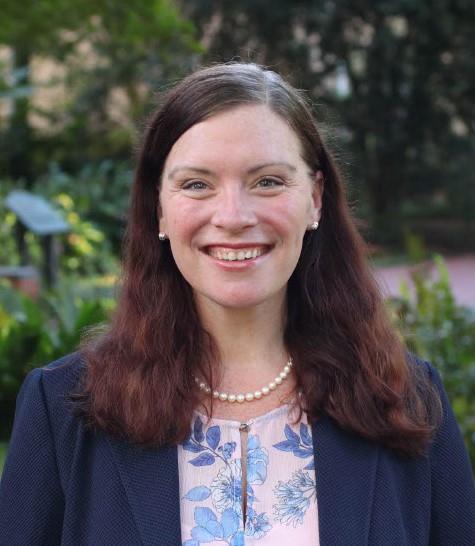
Dr. Katherine Ryker is available to present her talk, "A 1% Better Geoscience Education Ecosystem."
|
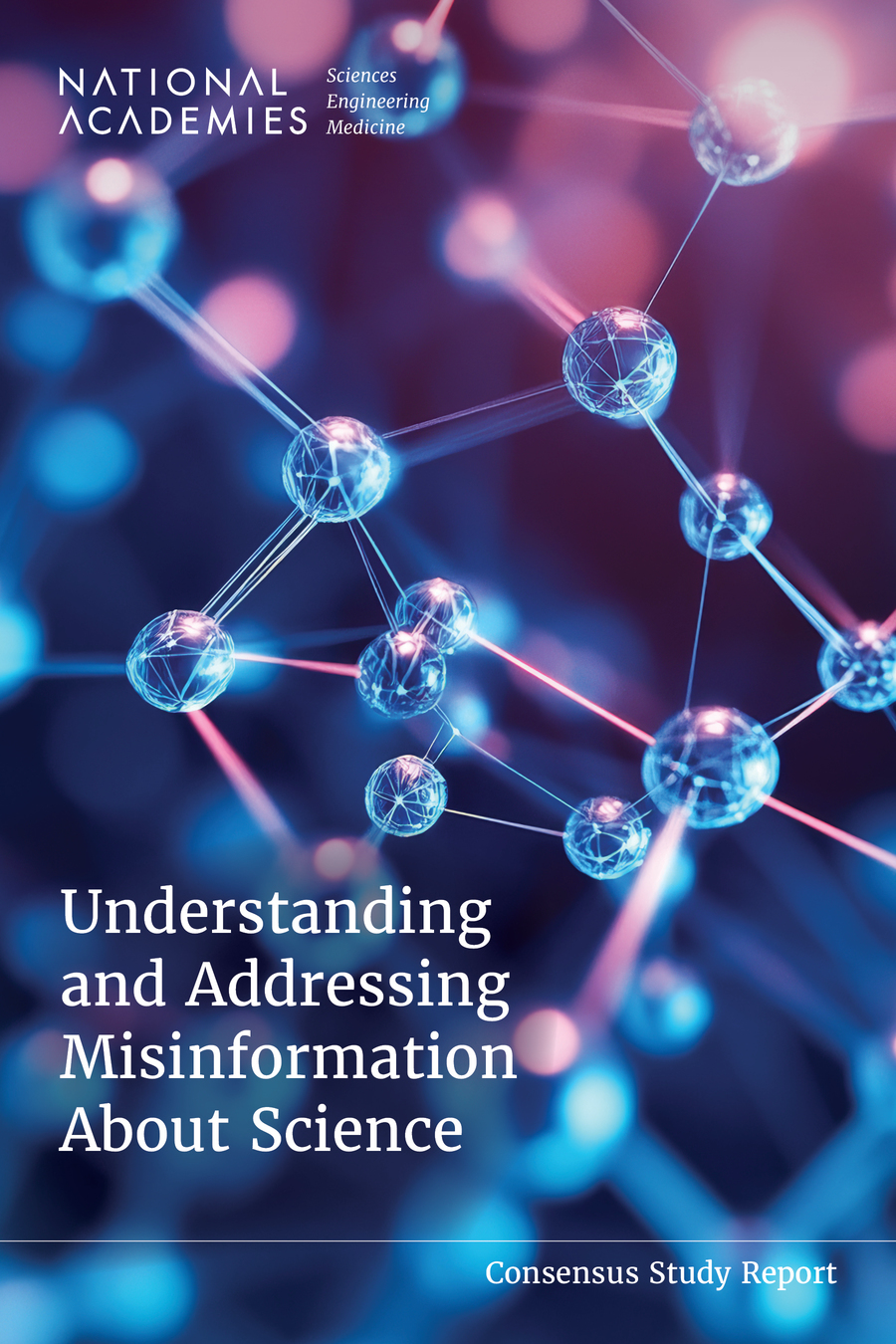
Understanding and Addressing Misinformation about Science
Our current information ecosystem makes it easier for misinformation about science to spread and harder for people to figure out what is scientifically accurate. Proactive solutions are needed to address misinformation about science, an issue of public concern given its potential to cause harm at individual, community, and societal levels. Improving access to high-quality scientific information can fill information voids that exist for topics of interest to people, reducing the likelihood of exposure to and uptake of misinformation about science. This 2025 National Academies of Science interactive consensus report characterizes the nature, scope, and impacts of this phenomenon, and provides guidance on interventions, policies, and future research. It aims to illuminate the impacts of misinformation about science and potential solutions across a diversity of individual peoples, communities, and societies.
|
 |
Educational Resource: Hawaiian Lava Rocks Hold Kilauea's Deepest Secrets!
This new Every Rock Has A Story episode is a part of a special four-part mini series focused on the geology of Hawaii. Hosted by Dr. Ethan Baxter, and co-hosted by Hawaiian geology student Kamalani Poepoe, each 15-20 minute episode in this series conveys the story of a different rock with topics spanning volcanos, eruptions, Hawaiian history and culture, and even atmospheric CO2. The videos are perfect for children grades 4-8 but they are fun and appropriate, rated G for all ages, including younger kids, high school and college, adults, parents, and teachers.
For tips on how to integrate the episodes from Every Rock has a Story into your K-8 classrooms (and beyond!), watch this recording of the Education Section K-12 Working Group webinar which features Dr. Baxter, and educators who have effectively integrated the episodes into their teaching. The episode list will assist you in identifying the best episodes to support your curriculums.
|
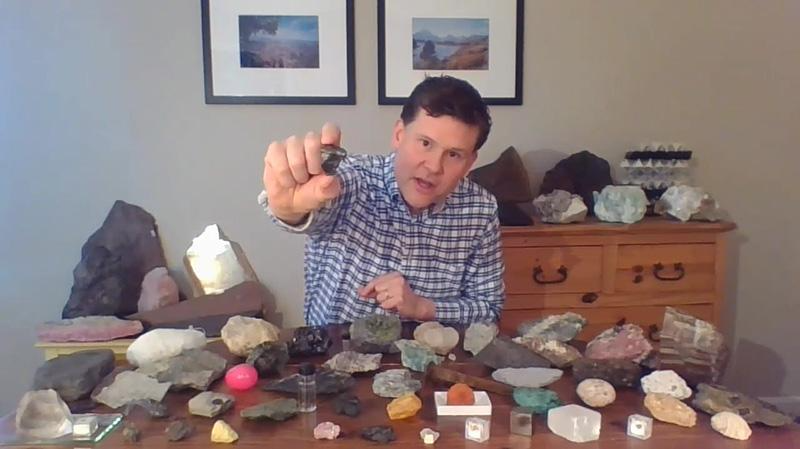
Every Rock Has A Story series host Dr. Ethan Baxter. Image from Boston College.
|
Employer Perspectives on Hiring Entry-Level Geoscientists
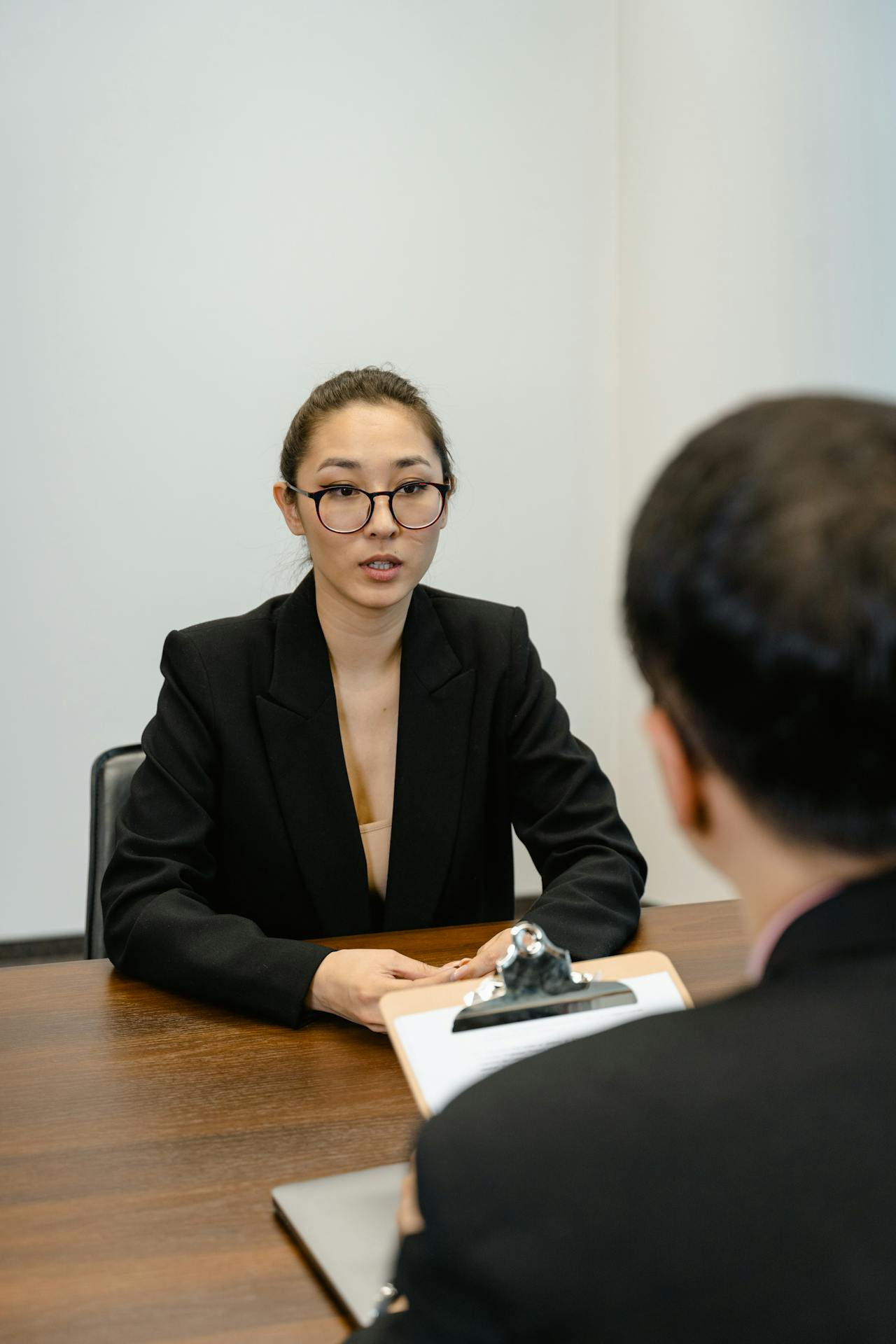
This Journal of Geoscience Education article by Karen Viskupic, Anne Egger, and Gregory Shafer delves into the essential knowledge, skills, and dispositions that geoscience employers from three different sectors reportedly seek in new hires, as well as how those qualities are assessed during the interview process. Employers participating in the study underlined the importance of communication and field skills, and reported that they expected to train new hires on position-specific skills. Applicants that are eager to learn and express a collaborative, flexible disposition are desirable. Employers used online job postings, word of mouth, and personal connections to recruit new hires, and evaluated candidates through interviews, application materials like CVs and resumes, as well as practical, skill-based exercises.
|
|
Calling All Photographers
We would like to feature your photos of Earth and space science on our section website! Submit your original photos with your name and a caption. Photos can be of anything that represents Earth and space science or teaching and learning. If people are in your photo, please be sure to obtain their permission before submitting!
Submit your photos to: https://forms.gle/3Je8cZCqgc9y68Sw5. A big thank you to everyone who has already submitted––take a look at your pictures on our updated home page!
|
 |
Words of Advice
We know there are many educators with a wealth of lived experiences and advice to share! The Education Section invites you to submit your tips for effective teaching and learning, advice for early career instructors, or quotes that inspire your career. We would like to showcase your words and have prepared space for them on our section website.
Submit your teaching and learning tips, advice, and inspiration to: https://forms.gle/vQ7P9WNSYVPCYxm68. A big thank you to everyone who has already submitted––take a look at your words on our updated home page!
|
 |
We’ve Got Mail!
The Education Section newsletter accepts member-suggested submissions! Contact us at edsectionnewsletter@gmail.com with timely events, articles, or programs relating to education in the Earth and space sciences. To be considered for inclusion in the monthly newsletter, please send items by the first of the month. We look forward to hearing from you!
|
 |